


Go to main content

News

Result: (272) Showing 241 - 270


Kvoteraad 130617 lav

Recommends reducing cod quota by 20%

13.06.2017

The International Council for the Exploration of the Sea (ICES) recommends that the cod quota in the Barents Sea next year does not exceed 712,000 tonnes. This is a reduction of 20% compared to this year’s quota.

“We are experiencing a natural decline in Atlantic cod stocks, which we need to take into consideration,” says the Research Director at the Institute of Marine Research, Geir Huse.


shutterstock279878456

Can pesticides end up in salmon?

30.05.2017

We are now seeing much less of the ‘old’ environmental contaminants like dioxins and DDT in farmed salmon, after plant ingredients replaced fish oil and meal in the feed. Is it possible, though, that we have created a new problem caused by pesticides from agriculture ending up as residues in fish feed?


flatostersaveivindsennes

Norwegian bivalve molluscs in good condition

24.05.2017

The annual monitoring showed that one in four flat oysters had cadmium levels above the maximum level, but that Norwegian bivalve molluscs are otherwise in good condition.


nifeslab09senneset 1

Why do more farmed salmon lose their sight in summer?

22.05.2017

Farmed salmon often lose their sight in summer as cataracts make their eyes opaque. This happens when the temperature rises, but exactly why it happens has not been known. Scientists at NIFES have now found out more about the link between sea temperature and blindness in salmon.


Innsamling av fisk på dekk

Dr. Fridtjof Nansen has started working

18.05.2017
Cruise leader Reidar Toresen reports that the new research vessel Dr. Fridtjof Nansen is well under way on its very first cruise off North-West Africa.
 
– We left Casablanca in the evening 8 May and we are now working in the ocean between Morocco and The Canary Iles until 7 June, says Toresen. – During 2017 the goal is to cover the whole west coast of Africa, from Casablanca to Cape Town, he adds. 


mx0b3708

Plan to merge the Institute of Marine Research and NIFES

12.05.2017

In its revised national budget, the Norwegian government proposes merging the Institute of Marine Research (IMR) and NIFES – The National Institute of Nutrition and Seafood Research.


shutterstock556711594

Sufficient levels of marine fatty acids in fish deprived Nepal

04.05.2017

Bhaktapur is nearly 1,000 kilometres away from the nearest ocean. Nevertheless, the Nepalese have good levels of marine fatty acids in their blood. The reason for this is a mystery to scientists.


kveiteaveivindsenneset

Very high levels of undesirable substances in halibut weighing over 100 kg, but low levels in smaller halibut

26.04.2017

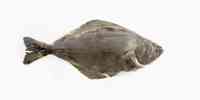
Large halibut weighing over 100 kg contain very high levels of undesirable substances, according to a new survey. Halibut weighing less than 40 kg, however, which accounted for more than 80 per cent of the analysed fish, contained low levels of undesirable substances like mercury and organic contaminants. For 85 per cent of the halibut analysed, the levels of undesirable substances were below the EU maximum level in all parts of the fillet.


img5454sebrafiskstripegamlefarifokus1b

Low folate in feed leads to fewer and weaker fish embryos

31.03.2017

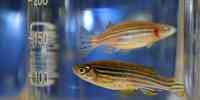
Deficiencies in B vitamins such as folate and vitamin B12 affect the offspring’s genes. Studies on fish show that even a slight B vitamin deficiency leads to much lower fecundity and weaker offspring.


es43584oppdrettslakseivi

More environmental pollutants in wild salmon than in farmed salmon

24.03.2017

The levels of environmental pollutants are higher in Norwegian wild salmon than in Norwegian farmed salmon. These are the results of a recent Norwegian study. This is the first major study to compare the species of wild salmon that lives in Norwegian waters (Salmo salar), with Norwegian farmed salmon.


Forskningsfartøyet Dr

Prime Minister to name new research vessel

22.03.2017
Norwegian Prime Minister Erna Solberg will name the new Norwegian research vessel Dr. Fridtjof Nansen Friday 24 March in Oslo harbour. The vessel represents the pinnacle of Norwegian marine technology, and will play a central role in the EAF-Nansen Programme which over the last 40 years has aided coastal nations in Africa and Asia in  developing marine research and sustainable fisheries management. 


effokt09062

No Anisakis in farmed rainbow trout

26.01.2017
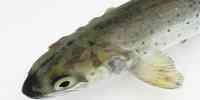
No Anisakis was found in farmed rainbow trout intended for human consumption, shows a new report from NIFES.


Dr

State-of-the-art research vessel for Development Cooperation

10.01.2017

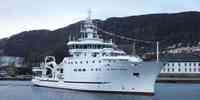
The new RV Dr. Fridtjof Nansen arrived in her home harbour Bergen for the first time today.  Now starts a two months period of testing of equipment and functions before she leaves Casablanca in the beginning of May for her very first scientific survey.  


Anna Wargelius får publikasjonspris

Publication prize for “knock-out” article on genetics

05.01.2017

Anna Wargelius received the Institute of Marine Research’s 2016 publication prize for an article on how mutations can be used to change the DNA sequence in salmon. Essentially, the technique involves “knocking out” specific genes to create a sterile farmed salmon.


Kongelig merking

King and president joined mackerel-dugnad

01.01.2017

Since 2011, over 250,000 mackerels have been electronically tagged and released back into the sea. On Thursday King Harald of Norway and the Icelandic presidential couple sent out another three mackerels to collect data in the name of research.


tarekar

Kelp to shield mussels from ocean acidification

29.11.2017

A joint Norwegian-Chinese project in Austevoll is investigating whether kelp farms in China can protect farmed mussels against increasing ocean acidification.


byggning

IMR and NIFES share the same homepage

29.11.2017

The Institute of Marine Research (IMR) and The National Institute of Nutrition and Seafood Research (NIFES) now share the same homepage. This is due to the process of merging the two institutes. The formal date for the merge is the 1th of January 2018.


Vintertoktet18 1

Ocean acidification hurts the whole ecosystem

07.03.2018

From the tropics to the Arctic; increased ocean acidification will have huge, negative effects on marine ecosystems. A new study shows that the ocean management should be less sector based, according to scientist.


krabbebilde Eivind Senneset

Cooking crabs correctly keeps the claw meat cadmium-free

19.03.2018

At several locations in Norway, brown crabs contain high levels of the toxic heavy metal cadmium. By preparing a crab correctly, you can prevent the great majority of the heavy metal from entering the claw meat.


Sevastopol i Bergen
story

Sixty years of Norwegian–Russian marine research cooperation

16.03.2018

The Soviet research vessel Sevastopol arrived in Bergen on 16 February 1958. On board were eight scholars who were to resume the marine research cooperation that Norway and Russia had established before the Russian Revolution of 1917. Half a year later, Norwegian marine scientists returned the favour by visiting Murmansk.


grønngyltTonjeKSørdalen

Escaped wrasse may affect local populations

21.03.2018

Salmon escaping from fish farms is a known problem. New research shows that wrasse can also escape and spread their genes amongst the “locals”.


HI 037313

Northern kelp forests take longer to recover from trawling

03.04.2018

A five-year interval between trawling is not enough for the kelp forest in Nordland. The important flora and fauna in the kelp forest does not have time to establish itself during the normal gap between kelp harvests. Kelp forests are believed to be an important nursery and feeding ground for many species of fish.


HI 001818

Fishing increased around the lobster reserve

21.01.2019

The lobster reserve was supposed to ensure more and bigger lobsters in the surrounding area as well. Then people started fishing three times as much just outside the borders.


Ubåten ved Fedje Kystverket

Mercury in fish at Fedje is not from submarine wreck

23.07.2021

The mercury found in fish at Fedje does not come from the submarine wreck. That is confirmed by the mercury’s own “fingerprint”.


Symphodus melops  gronngylt svensen
opinion

Grunt, click and plop: The language of the corkwing wrasse

28.01.2021

The corkwing wrasse has a fascinating behaviour. Now, researchers have mapped the sounds made by this colourful fish. 


Matre sett fra luften

Matre: 50 years of solving some of the most significant challenges in aquaculture

30.09.2021

The key to its success is fresh water from the Matre mountains.


Photo of a sea trout with salmon lice.

Confirmation that sea trout are heavily affected by salmon lice

24.01.2022

In Western Norway, over half of all sea trout are infested with so many salmon lice that you would expect it to seriously harm their health.


Person inserting acoustic tracker into fish.

Big Data reveals the secret lives of animals

25.02.2022

New and improved technology allows researchers to track the movements of fish and other animals from second to second.


HI 050434

– Quota recommendations virtually unaffected

06.09.2022
The first bilateral quota recommendation for cod, haddock and deepwater redfish in the Barents Sea is now ready. 


HI 041389

IMR and UN collaborate on Special Journal Issue dedicated to Climate Change and Seafood Safety

18.10.2022

Seafood safety in a changing environment is the focus of the recent special issue of Environmental Pollution, a joint effort by IMR and UN-IAEA. Two out of eleven papers were written by IMR scientists.